Gelephu Mindfulness City (GMC) is attracting increasing attention from international investors, businesses, institutions, and project developers seeking opportunities in Bhutan’s new Special Administrative Region.
Identifying an opportunity is only the initial stage for an investor.
Before committing capital or entering into binding arrangements, a more fundamental question arises:
What legal issues could affect the investment?
GMC has its own legal and regulatory structure, and understanding it is key to investors assessing the jurisdiction. The questions extend beyond company registration. These may include, among others, applicable law, corporate structure, foreign ownership, licensing, tax, capital movement, employment, contracts, dispute resolution, intellectual property, land, and sector-specific regulation.
The legal framework is also still developing. That makes it particularly important for investors to distinguish between what is currently established, what is subject to further regulation, and what needs to be confirmed for a particular transaction.
This article sets out ten legal questions that international investors should consider before doing business in Gelephu Mindfulness City.
1. What exactly is GMC, and how does its legal system differ from the rest of Bhutan?
Gelephu Mindfulness City is a Special Administrative Region of Bhutan that has a unique legal and regulatory framework. Its legal architecture supports an international business environment while operating within Bhutan’s constitutional and sovereign framework.
The Application of Laws Act 2024 is a key basis for applying laws in the context of GMC; other GMC-specific laws set out rules on companies, financial services, taxation, employment, customs, and other commercial issues. The official GMC legislation portal now lists a substantial body of legislation applying within the City.
For an investor, this distinction matters because it is not enough to ask what Bhutanese law generally provides. The relevant question is:
Which legal regime governs this particular investment, transaction, or business activity in GMC?
The answer can affect corporate structure, regulatory approvals, employment arrangements, taxation, contracts, and dispute resolution.
The IMF has also noted that the legal framework governing GMC’s relationship with the rest of Bhutan remains evolving, particularly on labor, goods, and capital mobility.
Early legal assessment is therefore critical for investors considering entry into GMC.
Why this matters
A business can be commercially attractive but legally complicated if the investor assumes that a single set of rules applies to every aspect of the investment.
Understanding the applicable legal regime should therefore be part of the initial due diligence process, rather than something addressed after the investment structure has already been decided.
2. Is GMC Legally Separate From Mainland Bhutan?
A second question naturally follows:
How different is doing business in GMC from doing business elsewhere in Bhutan?
GMC’s Special Administrative Region status gives it a distinct institutional and regulatory framework. The Royal Charter and subsequent legislation establish the basis for the City’s governance and administration.
However, investors should not treat GMC and the rest of Bhutan as completely disconnected legal environments.
The relationship between GMC and mainland Bhutan matters for issues such as labour, movement of goods, capital, taxation, immigration, banking, and other activities that may cross the City’s boundaries.
This distinction becomes particularly important for businesses that intend to operate in both GMC and other parts of Bhutan.
For example, an investor may establish an entity in GMC but:
- employ people elsewhere in Bhutan;
- source goods from mainland Bhutan;
- provide services outside GMC;
- maintain business relationships with Bhutanese entities;
- move capital between GMC and the rest of Bhutan; or
- operate a project spanning more than one jurisdictional environment.
The legal analysis may therefore need to consider both the GMC framework and the wider Bhutanese regulatory environment.
GMC vs. Mainland Bhutan: The Practical Question
Rather than asking simply whether GMC is “separate” from Bhutan, investors should ask:
Which aspects of my business are governed within GMC, and which require compliance with the broader Bhutanese legal and regulatory framework?
That distinction can significantly affect structuring and compliance.
3. How Do I Incorporate a Company in GMC?
Once an investor understands the applicable legal environment, they can consider the appropriate legal vehicle.
Company incorporation in GMC is not simply a registration exercise. The choice of entity can affect ownership, governance, liability, taxation, financing, regulatory obligations, and future exit options.
Investors should first determine which entity types are available for their proposed business and whether the chosen structure complies with relevant regulatory requirements.
The incorporation process may involve the Gelephu Companies Registration Office (GCRO) and, depending on the structure and activity, interaction with licensed corporate service providers.
An international investor should expect the legal assessment to cover matters such as:
- proposed business activities;
- ownership structure;
- directors and management;
- constitutional documents;
- shareholder arrangements;
- beneficial ownership;
- regulatory approvals;
- capitalisation;
- financing arrangements; and
- ongoing compliance obligations.
Incorporation is not the same as permission to operate.
One of the most important distinctions for investors is that incorporating an entity does not necessarily mean the entity is authorized to conduct every activity it proposes to undertake.
A company may be properly incorporated while still requiring a separate license, regulatory approval, or clearance before carrying out a particular regulated activity.
That is why incorporation should be considered as part of the broader investment structure—not as the end of the legal process.
4. Should I Register in GMC, Mainland Bhutan Under the FDI Regime, or Consider Both?
For sophisticated international investors, one of the most important structuring questions may be:
Should the investment sit entirely within GMC, entirely under Bhutan’s mainland FDI framework, or use a structure involving both?
This question deserves careful attention because GMC and mainland Bhutan can present different legal and regulatory considerations.
The right structure may depend on:
- the location of the actual business activities;
- the sector;
- foreign ownership;
- regulatory requirements;
- tax considerations;
- access to infrastructure;
- contracts with Bhutanese entities;
- financing arrangements; and
- long-term expansion plans.
In some circumstances, a business may need to consider whether a dual structure is commercially and legally appropriate—for example, a holding or investment structure connected with GMC alongside an operating presence elsewhere in Bhutan.
However, there is no universal answer.
Early structural decisions are crucial.
Changing a corporate structure after committing to an investment can be expensive and complicated.
It may require restructuring ownership, transferring contracts, changing licenses, addressing tax consequences, or renegotiating financing arrangements.
For this reason, international investors should compare the available structures before incorporation and before entering material contractual commitments.
The key question is not:
“Where is it easiest to register?”
It is:
“Which structure best matches where we will operate, how we will invest, and what legal and commercial risks we need to manage?”
5. What Are the Tax Obligations for GMC-Registered Businesses?
Consider tax at the start of the investment process, not after the company is established.
GMC’s tax framework includes the Income Tax Act applicable to the City, along with broader questions about customs, goods and services, and cross-border transactions.
For an international investor, relevant questions can include:
- What taxes apply to the proposed business?
- How will profits be taxed?
- Are withholding taxes relevant to cross-border payments?
- How are dividends, interest, and service fees treated?
- Could the business create a permanent establishment?
- What if transactions involve both GMC and mainland Bhutan?
- What customs or indirect tax obligations could arise?
- Do tax treaty provisions apply to the investor’s home jurisdiction?
These questions matter most when the investment involves cross-border financing, intellectual property, management services, or payments between related parties.
Do not rely on headline tax claims.
Investors should also be cautious about broad statements regarding “zero tax,” tax incentives, or preferential treatment.
A headline incentive does not necessarily answer how a particular transaction will be taxed.
Consider the following when evaluating the legal and tax situation:
- the investor’s jurisdiction;
- the proposed structure;
- the nature of the income;
- where activities are carried out;
- the relevant legislation; and
- any applicable tax treaty.
Tax rules and treaty arrangements can also change. Any investor considering a significant GMC transaction should therefore confirm the rules in force at the time of investment.
6. What Financial Services Regulations Apply?
Financial services businesses face a different level of regulatory scrutiny than ordinary commercial businesses.
If the proposed investment involves banking, insurance, investment management, funds, capital markets, digital assets, or another regulated financial activity, the investor needs to identify the relevant licensing and compliance requirements before entering the market.
GMC has developed a financial-services regulatory framework, including regulations associated with financial markets and the Gelephu Financial Services Office.
For regulated businesses, legal due diligence should cover issues such as:
- whether the proposed activity is regulated;
- which license is required;
- who the regulator is;
- minimum capital or organizational requirements;
- governance;
- customer protection;
- anti-money laundering requirements;
- know-your-customer obligations;
- sanctions compliance;
- reporting;
- outsourcing; and
- ongoing regulatory supervision.
Digital assets require particular care.
GMC’s positioning as a technology and financial services hub has also attracted attention in the digital assets sector.
But investors should avoid treating the existence of a digital-asset licensing framework as blanket permission for every cryptocurrency, blockchain, or Web3 activity.
The legal classification of the proposed activity matters.
A business should determine whether its products or services fall within a regulated category and what licensing, AML/KYC, or other compliance requirements apply.
For investors in regulated sectors, regulatory analysis should happen before the business model is finalized, not after launch.
7. How Are Employment and Labour Matters Regulated?
International businesses often focus heavily on investment and corporate structuring while underestimating employment and workforce issues.
That can be a mistake.
A GMC project may require a combination of local employees, foreign executives, technical specialists, contractors, and other workers. The legal framework governing employment and foreign workers should therefore be assessed as part of the initial business plan.
Investors should consider:
- employment contracts;
- employee rights and obligations;
- working conditions;
- termination;
- compensation;
- workplace policies;
- foreign-worker requirements;
- immigration and work permissions;
- workforce planning; and
- compliance responsibilities of the employer.
This issue is especially important for businesses that expect to bring specialized international talent into GMC.
The investor should establish who can work in the jurisdiction, under what conditions, and what approvals are required before making workforce commitments.
Plan employment compliance early.
Employment issues can also affect project timelines.
A business that cannot obtain the necessary workforce permissions or meet employment requirements may face delays even if its corporate structure and commercial agreements are otherwise ready.
For major projects, employment and immigration planning should therefore form part of the initial legal due diligence.
8. What Happens If a Legal Dispute Arises?
Investors should consider dispute resolution before signing contracts.
For cross-border investments, a dispute can involve multiple jurisdictions, currencies, governing laws, and enforcement questions.
A GMC-related contract may therefore need to address:
- governing law;
- court jurisdiction;
- arbitration;
- seat of arbitration;
- appointment of arbitrators;
- language;
- interim relief;
- enforcement; and
- allocation of legal costs.
The appropriate mechanism will depend on the transaction and the parties involved.
Why dispute resolution matters at the drafting stage
Consider a construction project that includes an international investor, a Bhutanese joint-venture partner, a foreign contractor, and a GMC-based operating company.
If the contract says that disputes will be “resolved amicably” without clearly establishing what happens if negotiations fail, the parties may face uncertainty precisely when they need clarity most.
Similarly, selecting a governing law without considering how it interacts with the place of performance and enforcement can create unnecessary complications.
For this reason, review dispute-resolution provisions alongside the agreement’s commercial terms.
The goal is not to assume that a dispute will happen.
It is to ensure that if something goes wrong, the contract provides a clear and enforceable path forward.
9. How are Data Privacy and Intellectual Property Protected in GMC?
Technology, financial-services, and innovation-focused investors should consider intellectual property and data protection from the beginning.
A business may bring into GMC:
- proprietary software;
- trademarks;
- confidential business information;
- customer databases;
- algorithms;
- technical know-how;
- research and development assets; or
- other intellectual property.
Before investing, determine how the proposed structure will legally protect and use assets.
Data protection is equally important.
A business collecting or processing personal information may need to consider applicable personal data rules, cybersecurity obligations, confidentiality requirements, and cross-border data transfers.
Questions technology investors should ask.
- Who owns the intellectual property created by local employees?
- How will confidential information be protected?
- Can customer data be transferred outside GMC?
- What contractual protections are required?
- What happens to IP if a joint venture ends?
- How should software, trademarks, and other assets be licensed between related companies?
These questions can be particularly important where a GMC entity is part of a multinational corporate group.
The investor should also distinguish between owning intellectual property and having the right to use it.
A company may own an asset globally but still need appropriate licenses, contracts, or registrations to use it in a particular jurisdiction.
10. What Land, Property and Sector-Specific Rules Should Investors Know?
For many GMC projects, land and property arrangements will be central to the investment.
An investor considering a hotel, manufacturing facility, healthcare project, educational institution, technology campus, or other physical development should understand the legal basis for occupying land or premises.
Relevant questions may include:
- Is the arrangement an ownership, lease, or another form of interest?
- What are the permitted uses?
- What development conditions apply?
- What approvals are needed?
- Who bears responsibility for infrastructure?
- What happens if the project is delayed?
- Can the interest be transferred?
- What happens on termination?
Review these issues alongside the project’s financing and construction arrangements.
Sector-specific regulation also matters.
GMC’s development strategy includes several economic clusters, including areas such as:
- spirituality and wellness;
- education;
- financial services;
- health;
- technology;
- industry and green energy; and
- sustainable living.
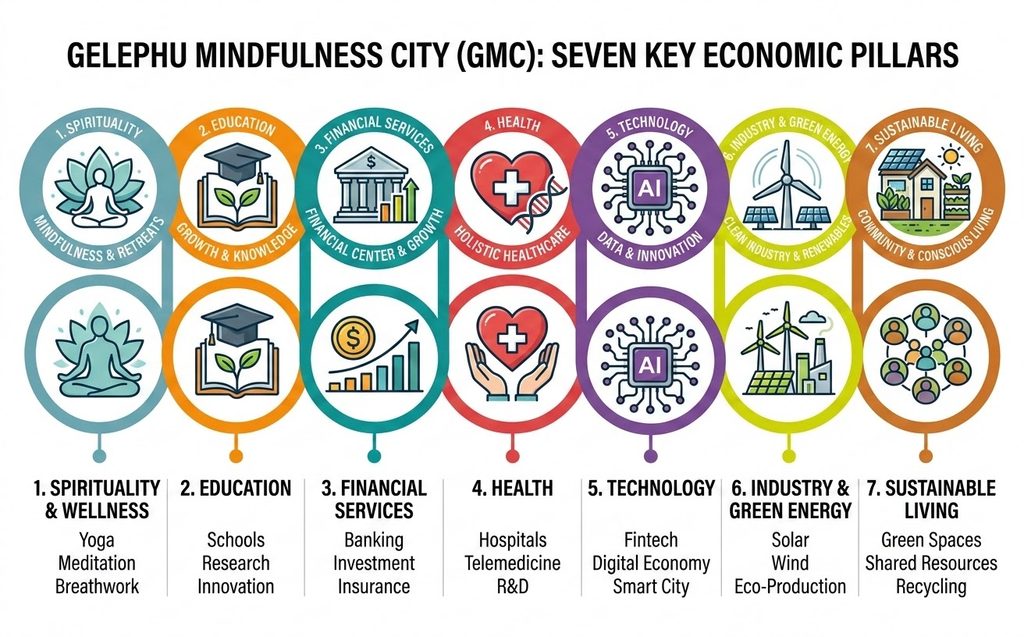
The legal requirements can differ substantially between these sectors.
A technology business, for example, may have very different regulatory considerations from a financial institution or healthcare provider.
Investors should therefore avoid assuming that a general GMC business framework answers all sector-specific questions.
The legal analysis should begin with the actual business model.
When Should an International Investor Involve Bhutanese Local Counsel?
International investors often have international lawyers, tax advisers, and consultants involved in a transaction. That expertise remains valuable.
But a GMC investment may also require local Bhutanese legal analysis.
Bhutanese counsel can help international investors and foreign law firms understand how the relevant GMC and Bhutanese legal frameworks apply to the proposed transaction.
For foreign law firms, local counsel can be particularly important when the transaction is led from another jurisdiction but requires advice on Bhutanese law.
The objective is not to replace international counsel.
It provides the local legal perspective needed to complete a cross-border transaction effectively.
Conclusion: Ask the Right Legal Questions Before You Invest
Gelephu Mindfulness City presents an emerging opportunity for international investors, businesses, and institutions looking to establish a presence in Bhutan.
But investors should assess the commercial opportunity alongside the legal framework.
For businesses operating across borders, these questions are especially important where GMC and mainland Bhutan interact.
The best approach is to address these legal questions before you begin incorporation, licensing, or contract negotiations.
Considering an investment or project in GMC?
Bhutanese Legal Solutions advises international investors, businesses, and foreign counsel on Bhutanese legal and regulatory matters. If you are evaluating a GMC opportunity, BLS can help assess the legal questions relevant to your sector, investment structure, regulatory requirements, contracts, and transaction timeline.
Consult with Bhutanese Legal Solutions about your GMC investment or project.